
Why Good Revision Matters—The Emotional & Practical Impact
Revision isn’t just about cramming facts—it’s about building deep understanding, boosting confidence, and reducing exam-day anxiety. Students who adopt effective revision strategies feel empowered, prepared, and calm instead of overwhelmed. Research shows passive revision (just rereading or highlighting) is far less effective than active, engaged methods.
When you use powerful, emotionally satisfying techniques, you’ll remember more, feel more in control—and face exams with less fear.
Core Principles of Smart Revision
Before diving into specific techniques, keep these underlying semantic keywords and learning-science ideas in mind (these will maximize your results):
- Active recall / retrieval practice – retrieving information strengthens memory.
- Spaced repetition/spaced practice—spacing your revision over time beats mass-cramming.
- Interleaving & varied practice—mixing topics rather than doing one topic over and over helps build flexible understanding.
- Metacognition & self-assessment—reflecting on how you learn, what works, and what doesn’t.
- Avoiding purely passive methods (e.g., rereading, highlighting without engagement) as they produce shallow learning
These principles will help you build a dynamic, effective, and emotionally empowering revision plan.
10 Highly Effective Revision Techniques That Work
Here are 10 proven, confidence-building, power-packed techniques you can start using right away:
1. Flashcards + Spaced Repetition
Make concise flashcards (question on one side, answer on the other). Use tools or physical cards and revisit them at increasing intervals (for example: day 1, day 3, day 7)—the so-called “2357” method.
Why it works: It forces active recall and uses spacing to embed in long-term memory.
2. The Feynman Technique (Teach to Learn)
Pick a topic, and explain it in simple terms as if teaching someone else (or a child). Identify gaps, revisit material, and repeat.
This method builds deep understanding and eliminates fuzzy knowledge.
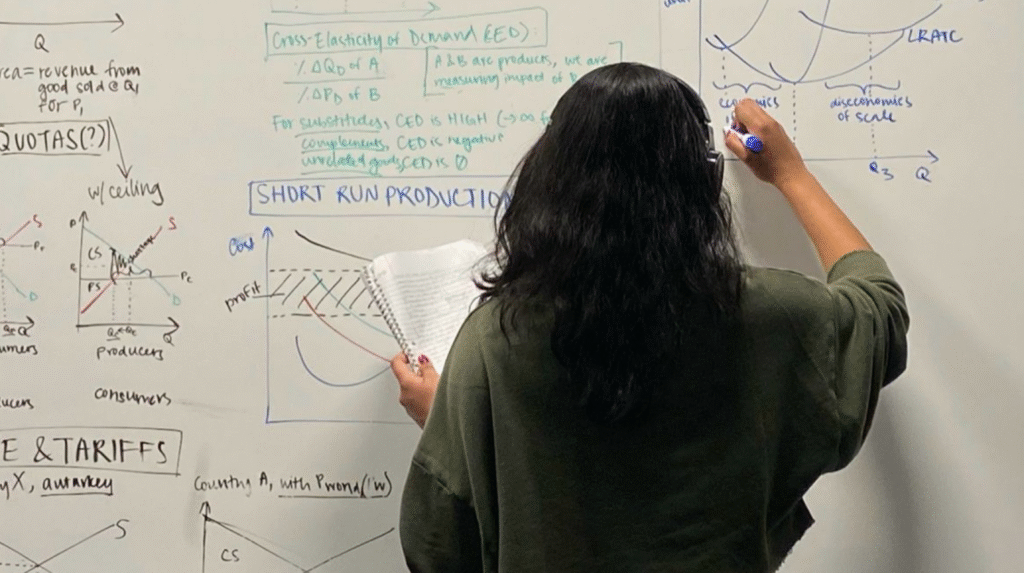
3. Mind-Maps, Diagrams & Dual Coding
Use graphic organizers (mind maps, spider diagrams, and flowcharts) to visually map concepts.
It transfers information into a visual/kinesthetic form and strengthens memory.
4. Past Papers & Practice Questions
Simulate the exam environment. Work out past paper questions, check mark schemes, and time yourself.
This builds exam-style fluency, reduces stress, and improves performance.
5. Study Groups & Collaborative Revision
Revise with peers: test each other, explain topics, and ask questions.
Shared energy and accountability drive motivation and deeper learning.
6. Pomodoro Technique & Focused Time-Blocks
Work in focused bursts (e.g., 25 minutes), then take a short break; repeat.
This builds momentum, avoids burnout, and keeps your brain fresh.
7. Blurting / Memory-Dump Technique
Read the section, close the book, and then write out everything you remember. Check gaps, revisit, repeat.
This reveals what you don’t know and strengthens retrieval.
8. Color-Coded Notes & Post-it-Note Strategy
Use colored flashcards or sticky notes around your home/room to reinforce key facts constantly.
This passive-active blend helps memory via repeated exposure.
9. Create a Revision Plan & Timetable
List topics, rank by difficulty, and slot into a timetable with specific time blocks.
Organization builds confidence and keeps you on track instead of panicking last minute.
10. Reflection & Self-Assessment
Regularly ask, “What works? What doesn’t? What needs more practice?” Use metacognitive reflection to refine your method.
This ensures you evolve your approach and maintain high performance. https://simple.wikipedia.org/wiki/Study_skills
How to Build Your Personalised Revision Routine
Follow these steps to create a dynamic, student-friendly, high-impact revision plan:
- Audit your material—list all the topics, subtopics, what you’re comfortable with, and what you’re weak on.
- Set a timetable—divide time by complexity and proximity to exam date. Prioritize hard topics early.
- Assign techniques—mix and match from the list above: flashcards, past papers, study groups, etc.
- Schedule active sessions—allocate blocks for focused revision (Pomodoro style) and maintain variety.
- Regular testing & retrieval practice—use quizzes, flashcards, and timed questions to trigger recall rather than passive reading.
- Review & adjust—at the end of each week, reflect: Which topics improved? Which methods are effective? Update the plan accordingly.
- Well-being matters—ensure breaks, sleep, and healthy food. Stress reduction is vital for memory and performance.
Common Mistakes to Avoid (and How to Fix Them)
- Mistake: Only rereading notes/highlighting.
Fix: Switch to active recall (e.g., flashcards, teaching). - Mistake: Leaving revision until too late (cramming).
Fix: Plan early, use spaced repetition, and schedule ahead. - Mistake: Using one single revision method for everything.
Fix: Vary your techniques to fit the topic type (visual, auditory, practical). - Mistake: Ignoring weak topics in favor of strong ones.
Fix: Prioritize difficult topics first; allocate more time there. - Mistake: No breaks or poor self-care.
Fix: Build in rest, exercise, and healthy habits. It’s as important as the study itself.
Why does good revision matter for students?
Good revision enhances deep understanding, boosts confidence, and reduces exam anxiety, enabling students to feel empowered, prepared, and calm rather than overwhelmed.
What are the core principles of smart revision?
Core principles include active recall, spaced repetition, interleaving and varied practice, metacognition and self-assessment, and avoiding passive methods like rereading or highlighting.
What are some effective revision techniques recommended for students?
Effective techniques include using flashcards with spaced repetition, applying the Feynman Technique to teach topics, creating mind maps and diagrams, practicing with past papers, and studying in groups for collaborative learning.
How can students personalize their revision routines?
Students should audit their material, set a structured timetable, assign various revision techniques, schedule active sessions, regularly review progress, and incorporate well-being practices to maintain motivation and effectiveness.
What common revision mistakes should students avoid?
Students should avoid only rereading or highlighting notes, leaving revision until too late, using a single revision method, neglecting weak topics, and ignoring the importance of breaks and self-care, instead adopting active recall, early planning, technique variety, prioritizing difficult areas, and maintaining good self-care.