
Preparing for a government exam may seem tough, but with the right strategy, smart revision, and focus, you can clear it on your first attempt. In this article we’ll unpack a complete blueprint to help you tackle your exam preparation, cover key topics like exam pattern understanding, study plans, mock tests, revision strategy, time-management, and staying motivated.
1. Understand the Exam Pattern & Syllabus
Know what you’re up against
Begin by getting familiar with the syllabus, exam pattern, and cut-off trends for your target exam. Many aspirants skip this and lose precious time later. According to one source: “Solve previous year question papers – to understand the standard of exam and the exam pattern.”
Key steps:
- Download the official notification from the conducting body (e.g., for SSC, UPSC, RRB, state PSCs).
- Break the syllabus into major sections (quantitative aptitude, reasoning, general awareness, English, etc) depending on your exam.
- Review previous years’ papers to identify recurring topics, weightages and difficulty level. http://govtcareerhub.com
Why this matters
Understanding what topics are frequently asked helps you prioritise your preparation, allocate time sensibly, and avoid studying everything in a scatter-gun way. This is especially important for a first-attempt success strategy.
2. Create a Study Plan & Time-Management Strategy
Build a realistic schedule
You’ve got the syllabus, now you need a map. A study plan helps you cover all topics with proper allocation of revision and practice. From sources:
- “Make a study plan that will have dedicated time for each subject and topic.”
- “One of the keys … is to create a well-structured study plan and have shorter, focused study sessions.”
Sample schedule framework
- Daily routine: Morning – read current affairs; Afternoon – core subject; Evening – practice & revision.
- Weekly routine: One full-length mock test or previous year paper; rest days for revision.
- Use time blocks of 45-60 minutes with short breaks. Avoid marathon sessions that drain focus.
- Track your progress weekly and adjust the plan if you’re falling behind.
Prioritise based on difficulty & weightage
Some topics carry heavier marks or are asked more frequently—focus more time on these. Also allocate extra time to your weaker areas (quantitative, reasoning, etc).
3. Choose the Right Study Materials & Resources
Quality over quantity
A large pile of books won’t help unless you pick the right ones and follow them thoroughly.
- Use trusted standard books (for quantitative aptitude, reasoning, English grammar, etc).
- For current affairs and general knowledge: daily newspaper reading + monthly magazine + reliable online portals.
Digital plus print
Given current trends, leverage online resources (video lectures, apps, quiz platforms) and keep notes in print or digital form for revision.
- Example: Platforms offering mock tests and previous year files help you practice effectively.
4. Practice with Mock Tests & Previous Year Papers
Build speed, accuracy & exam temperament
One of the most critical components of cracking an exam in first attempt is practical practice. Sources emphasise: “solve previous year’s question papers” is key.
- Start with topic-wise quizzes, then move to timed full-length mocks.
- Simulate exam conditions at home (no interruptions, timer on).
- Post-practice: Analyse performance, identify mistakes, work on them.
Why this gives you an edge
Mock tests train you for:
- Managing time pressure
- Understanding question style & difficulty
- Reducing anxiety and handling exam day stress
Fact: Many aspirants fail not due to lack of knowledge but due to bad time management and anxiety.
5. Revision & Smart Learning Techniques
Regular revision is non-negotiable
Without revision, long-term retention suffers. Here’s how to structure your revision:
- First revision: within 24-48 hours of learning.
- Then weekly: revisit the week’s topics.
- Monthly: revise full syllabus snapshot and mock test errors.
Use mnemonics, memory palaces, flash cards to aid retention.
Focus on weak spots
As you progress, you’ll discover your weaker areas via mock test feedback. Allocate dedicated time to them until you’re comfortable. This targeted revision strategy helps especially in the first-attempt scenario.
6. Current Affairs & General Awareness Mastery
Why you cannot ignore it
For many competitive government exams, the General Awareness / Current Affairs section is a game-changer. Sources emphasise reading news and staying updated.
- Read a national English newspaper (e.g., The Hindu, Indian Express) daily.
- Maintain a notebook or digital file of major events (national, international, economic, policy changes).
- Use monthly current affairs magazines/online summaries for revision.
How to integrate it into routine
- Start your study session with 15-20 minutes of news reading and note-making.
- Use weekends to consolidate your notes and quiz yourself on past month’s current affairs.
- Use question banks that include current affairs sections to practice.
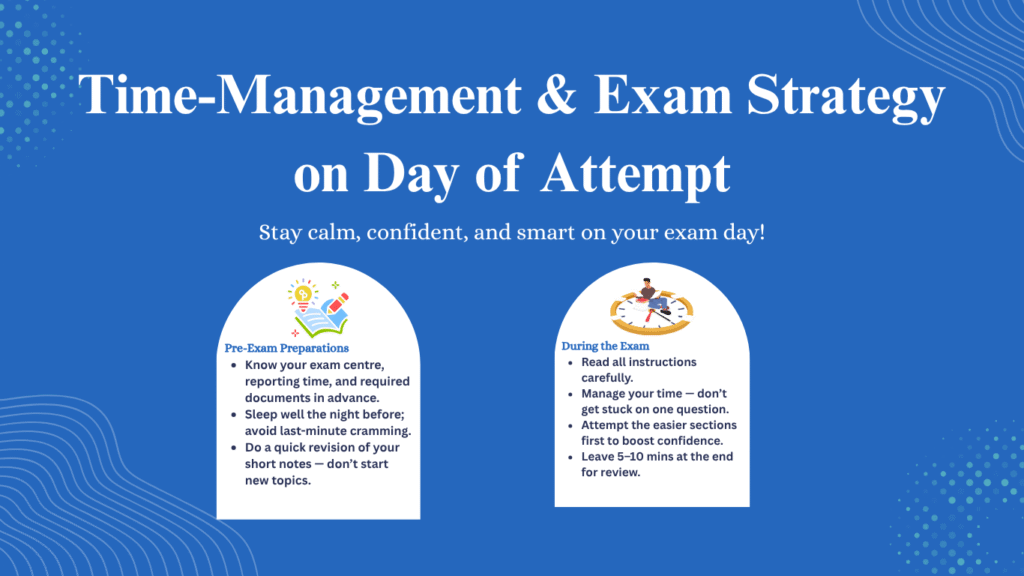
7. Time-Management & Exam Strategy on Day of Attempt
Pre-exam preparations
- Know the exam centre, reporting time, required documents.
- Sleep well the night before; avoid last-minute cramming.
- Have a quick review of your own notes – not a full new topic.
During the exam
- First, scan the paper and identify easy questions.
- Attempt high-confidence ones first, then move to tougher ones.
- Keep track of time: allocate roughly proportional to section weightage.
- Don’t get stuck on one question for too long—move on and come back if time permits.
- Keep calm—panic kills performance more than lack of knowledge.
8. Stay Motivated, Balanced & Persistent
The mental edge
Preparing for a government exam can be a long journey, especially if you’re attempting to crack it on your first go. From real aspirants:
Key habits
- Daily short breaks to refresh your mind (walk, music, meditation).
- Weekly reward for milestones achieved (e.g., complete one subject).
- Stay in a positive peer group / study group for motivation.
Avoid burnout
- Study for sustained hours only; rest is equally important.
- Proper nutrition and light exercise enhance focus.
- Re-assess your plan if you’re consistently missing targets—better to adjust early than panic later.
FAQ Section
Can I really crack a government exam in the first attempt?
Yes, many aspirants do. What makes the difference is a focused strategy, consistent effort, and smart preparation—not just hard work.
How many hours should I study daily?
There’s no set rule—it depends on your existing knowledge base, the exam difficulty, and your timeline. More important is quality of study sessions, not just hours. Short, focused blocks of study yield better results.
Are coaching classes necessary?
Not always. If you have discipline, good resources and the ability to self-study, you can succeed without coaching. Coaching helps if you’re confused about strategy or need guided mentorship.
How important are mock tests?
They’re vital. Mock tests replicate the exam environment, improve your speed and accuracy and help you identify weak areas. Many sources call them non-negotiable.
What if I fail first time?
Don’t view it as defeat—view it as feedback. Analyse your performance, identify what went wrong (time-management, weak sections, exam stress) and refine your strategy for next time. Persistence + correction = success.